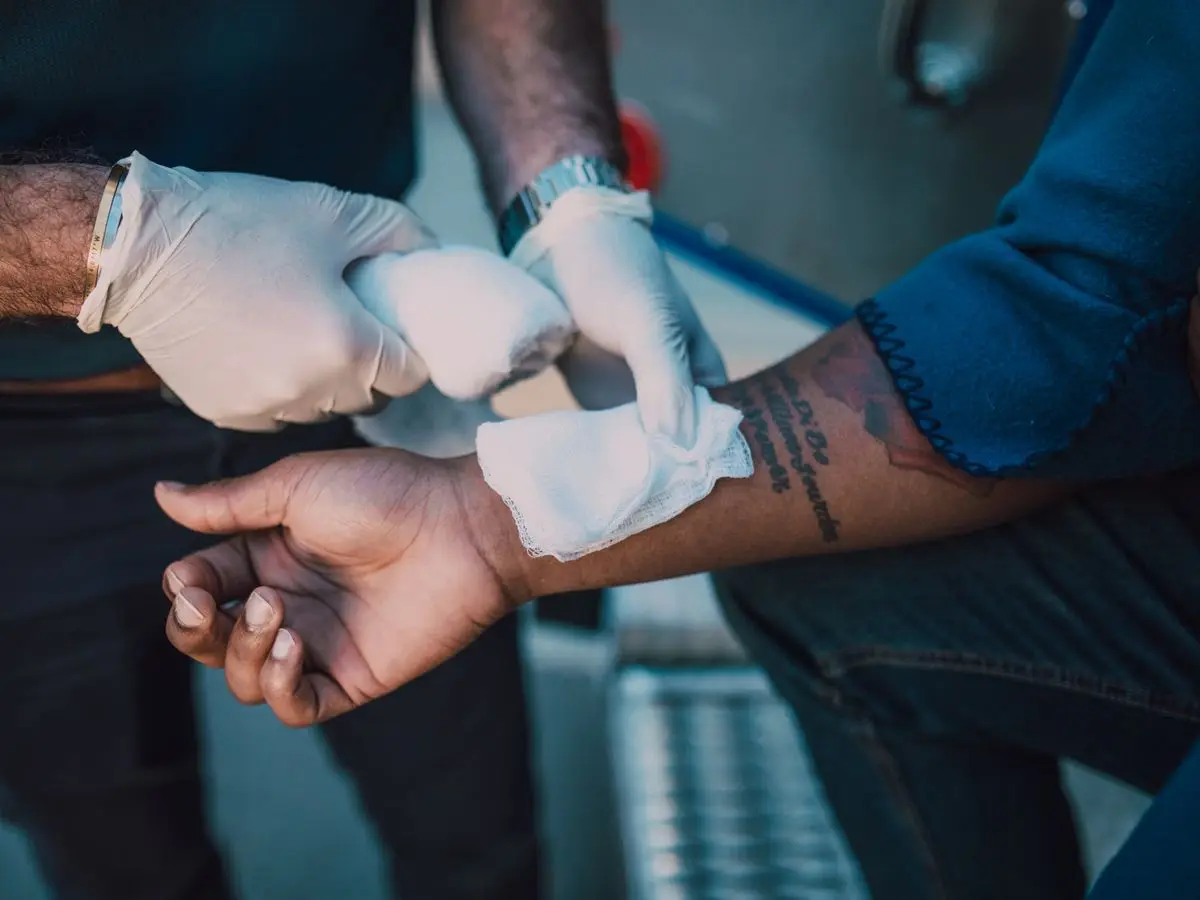


Conditions We Treat
What Is Incision and Drainage of an Abscess?
Incision and drainage, often called I&D, is a small in-office procedure to open and empty a skin abscess. An abscess is a walled-off pocket of pus beneath the skin caused by a bacterial infection, most often Staphylococcus aureus including MRSA (methicillin-resistant Staph aureus). Antibiotics alone usually cannot cure a true abscess because they don't penetrate the pus pocket well. The infection has to be physically drained.
At Good Health NC in Knightdale, we perform I&D on the same day you walk in, in the vast majority of straightforward cases. The procedure usually takes 15 to 30 minutes from numbing to bandaging, and most patients walk out feeling immediately better because the pressure is gone.
Abscesses, Boils, and Infected Cysts We Drain
Our clinical team performs I&D for:
- Skin abscesses anywhere on the trunk, arms, legs, buttocks, or scalp
- Boils (furuncles) and grouped boils (carbuncles)
- Infected sebaceous and epidermoid cysts that have flared up
- Hidradenitis suppurativa flares in accessible areas
- Paronychia (infected nail-fold abscesses)
- Folliculitis with abscess formation
- Bartholin's gland abscess (referred to gynecology depending on size and location)
- MRSA-suspected abscesses with appropriate culture
For recurrent boils, we also screen for the underlying cause. Recurrent staph carriers, uncontrolled diabetes, and immune issues all contribute. If we identify something systemic, you can transition directly into our diabetes care or chronic condition management program at the same clinic. For deeper wounds or lacerations rather than abscesses, our suturing and wound care page covers that pathway. The CDC's MRSA information page is a useful patient resource on staph and MRSA infections.
When To Come In for I&D
Come in as soon as a suspected abscess shows any of the following:
- A red, hot, swollen lump that is firm at first and then becomes soft or fluctuant in the center
- Pain out of proportion to the size of the lump
- Drainage of pus on its own through a small opening
- Surrounding redness that is spreading (cellulitis)
- Fever, chills, or feeling generally ill with a skin infection
- A history of recurrent boils or known MRSA colonization
Go to the ER instead if you have severe spreading redness, very high fever, the abscess is on your face near the eye or in the mouth, you have rapidly worsening swelling, or you are significantly immunocompromised. For chest, perirectal, or genital abscesses with significant swelling, the ER is also the right call.
Time matters. An abscess that has fully matured but has not yet been opened only gets worse — more pain, more swelling, and a higher risk of the infection spreading into surrounding tissue.
What to Expect During and After the Procedure
Here is exactly what happens at our Knightdale clinic when you come in for an I&D:
- Evaluation. We confirm the lump is a drainable abscess and not a simple firm nodule, lymph node, or cyst that doesn't need to be opened. Sometimes a quick bedside ultrasound or palpation tells us the difference.
- Local anesthetic. We inject lidocaine to numb the skin over and around the abscess. This is the part most patients fear and find easier than expected.
- Incision. A small cut is made directly over the most fluctuant part of the abscess. Pus drains out, often under pressure.
- Drainage and irrigation. We express and irrigate the cavity to remove as much infected material as possible.
- Wound culture. We typically send a culture, especially when MRSA is suspected, so antibiotics can be adjusted if needed.
- Packing or loop drainage. Depending on the size, we either pack the cavity with sterile gauze or place a small drainage loop. Smaller abscesses may not need packing at all.
- Dressing and instructions. A clean dressing goes on. You leave with written aftercare, a follow-up plan, and antibiotics if indicated.
Aftercare basics: Keep the area clean and dry for the first 24 hours, then warm compresses 3 to 4 times a day. Change the dressing daily or as instructed. Watch for spreading redness, fever, or increasing pain.
Follow-up: Most patients are rechecked in 2 to 3 days to remove packing if placed, and to confirm the infection is resolving. Wound healing usually takes 1 to 2 weeks for small abscesses, longer for larger ones.
Treatment Beyond the Procedure
An I&D is the foundation of treatment, but it is often not the whole picture:
- Antibiotics. Smaller, uncomplicated abscesses in healthy patients often don't need antibiotics after drainage. Larger abscesses, surrounding cellulitis, immunocompromised patients, or MRSA-positive cultures get oral antibiotics, most commonly trimethoprim-sulfamethoxazole, clindamycin, or doxycycline.
- MRSA culture. We routinely culture abscesses, especially in patients with recurrent infections. Results take 2 to 3 days and help us tailor antibiotics.
- Pain control. Most post-procedure pain is well-controlled with ibuprofen and acetaminophen.
- Decolonization protocol. For patients with two or more abscesses in a year, we recommend a nasal mupirocin and chlorhexidine body wash decolonization protocol to reduce recurrence.
- Screening for underlying causes. Recurrent boils warrant a workup for diabetes, immune dysfunction, and skin colonization. The American Academy of Family Physicians' guidance on managing skin abscesses summarizes the evidence we follow.
For abscesses we determine are too deep, too complex, or in a sensitive location (face, hand, perirectal), we refer directly to surgery or the ER and help coordinate that care through our specialist referrals team.
Why Choose Good Health NC for I&D
Most patients have two real options for a painful abscess: a long ER wait, or a smaller urgent care that may or may not do the procedure that day. At Good Health NC, we handle straightforward I&Ds in-office, on a walk-in basis, with primary care follow-up built in. That matters because:
- You don't pay an ER facility fee for a 20-minute procedure
- You see the same clinical team for follow-up that did the original drainage
- If the abscess turns out to be recurrent, we already have you in the system to investigate the underlying cause
- We culture appropriately and adjust antibiotics, rather than treating empirically and hoping for the best
Walk-ins are welcome at our Knightdale location, and same-day appointment availability is the norm.
Common Incision & Drainage of Abscesses Questions
Cost depends on your insurance plan and whether you are paying cash. In North Carolina, cash prices for an outpatient I&D typically range from about $330 to $600. Most major commercial insurance plans, Medicare, and Medicare Advantage are expected to be accepted at opening, in which case you pay your normal urgent care copay plus any procedure-related cost share. Urgent care I&D is almost always dramatically less expensive than the same procedure performed in an emergency room.
Read full answerGood Health NC at 330 Sugar Magnolia Ln, Knightdale, NC 27545 performs in-office incision and drainage of skin abscesses, boils, and infected cysts on a walk-in basis. We are convenient to Wendell, Zebulon, Rolesville, Wake Forest, Garner, and East Raleigh. For complex abscesses requiring sedation, hospital admission, or surgical specialty involvement, we coordinate a transfer of care.
Read full answerAfter the procedure, the cavity continues to drain small amounts of fluid for several days, which is normal and expected. If we pack the wound, the packing is typically removed in 2 to 3 days at a follow-up visit at our Knightdale clinic. Most small to medium abscess wounds are fully healed within 1 to 2 weeks. Spreading redness, increasing pain, or new fever after drainage is not normal and should bring you back in immediately.
Read full answerA properly drained abscess in a healthy patient usually does not recur in the same spot. Recurrence in the same location often means there was an underlying cyst wall that needs to be excised after the infection resolves, or that the abscess wasn't fully drained. Recurrence in a different location often points to staph or MRSA colonization, uncontrolled diabetes, or another underlying factor. We screen for these on the follow-up visit and can start a decolonization protocol when indicated.
Read full answerNot always. Current evidence supports antibiotics for larger abscesses, abscesses with surrounding cellulitis, MRSA-positive cultures, immunocompromised patients, and any patient with systemic symptoms like fever. Smaller, uncomplicated abscesses in otherwise healthy patients often heal well with drainage alone. We make this decision case by case based on the size, location, your medical history, and culture results.
Read full answer